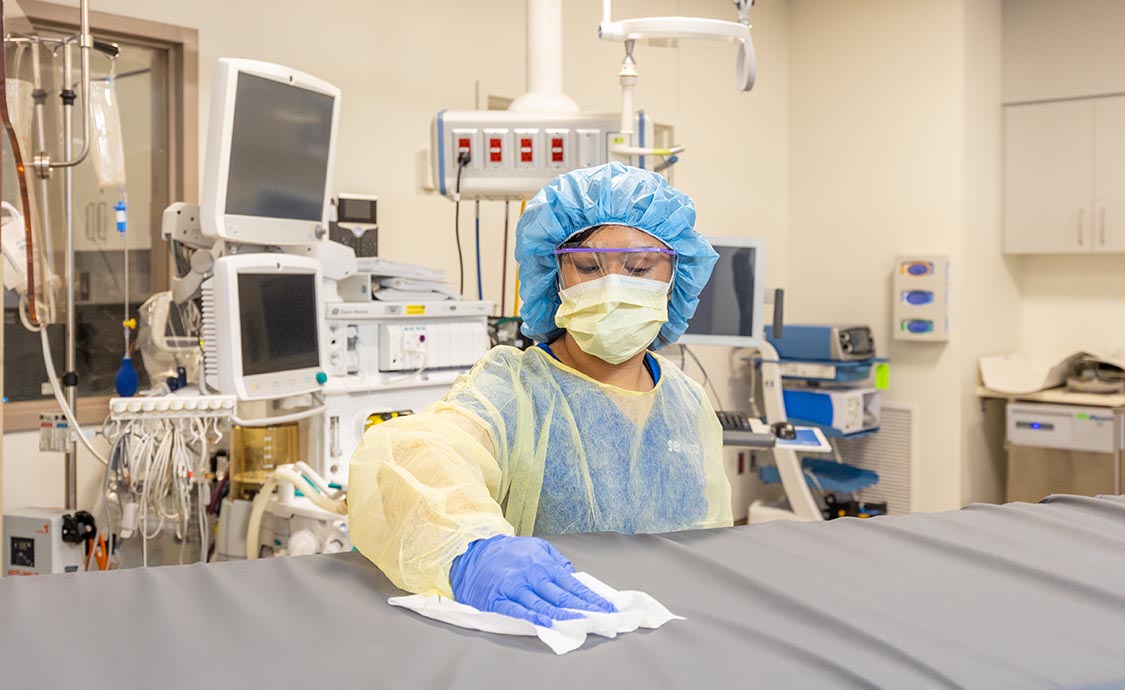
Environmental Services (EVS) teams play a pivotal role in sustainability efforts, significantly reducing the environmental footprint of businesses, hospitals, and other establishments. EVS has evolved beyond basic cleaning, now encompassing strategic initiatives to minimize waste, conserve resources, and promote healthier indoor environments. By employing sustainable methods, EVS offices not only contribute to environmental preservation but also enhance community health and operational efficiency, inspiring us all to strive for a greener future.
Embracing Eco-Friendly Cleaning Products
Sustainable EVS programs have made a shift to more environmentally friendly cleaning products. Most traditional cleaners have harsh chemicals in them that are bad for people and the earth. Green-certified options, on the other hand, clean well while also protecting the environment. These items break down naturally, don’t harm animals, and can be used in hospitals, schools, and other public places.
The transition to eco-friendly cleaning products not only reduces indoor pollution and safeguards cleaning staff from chemical exposure but also ensures responsible waste disposal. By adhering to environmental standards, EVS departments significantly improve the health and well-being of patients, staff, and visitors, instilling a sense of confidence in the safety of their surroundings.

Water Conservation Strategies
Environmental services worry a lot about how much water is used, especially in healthcare and big commercial buildings that need to be cleaned all the time. For EVS activities to last, they need to include strategies for saving water. One popular method is to use microfiber mops and cloths, which clean better than traditional methods while using a lot less water.
Modern cleaning tools that use little water, like low-flow scrubbers and steam-based systems, can also cut water use by a large amount. These tools, along with appropriate staff training, will ensure consistent and accurate use of water-saving methods.
Adopting targeted spray systems or electrostatic sprayers can cut down on the use of water and chemicals in places that need to be disinfected while improving coverage and cleanliness. These plans can save money and resources in the long run.
Reducing Waste Through Smarter Practices
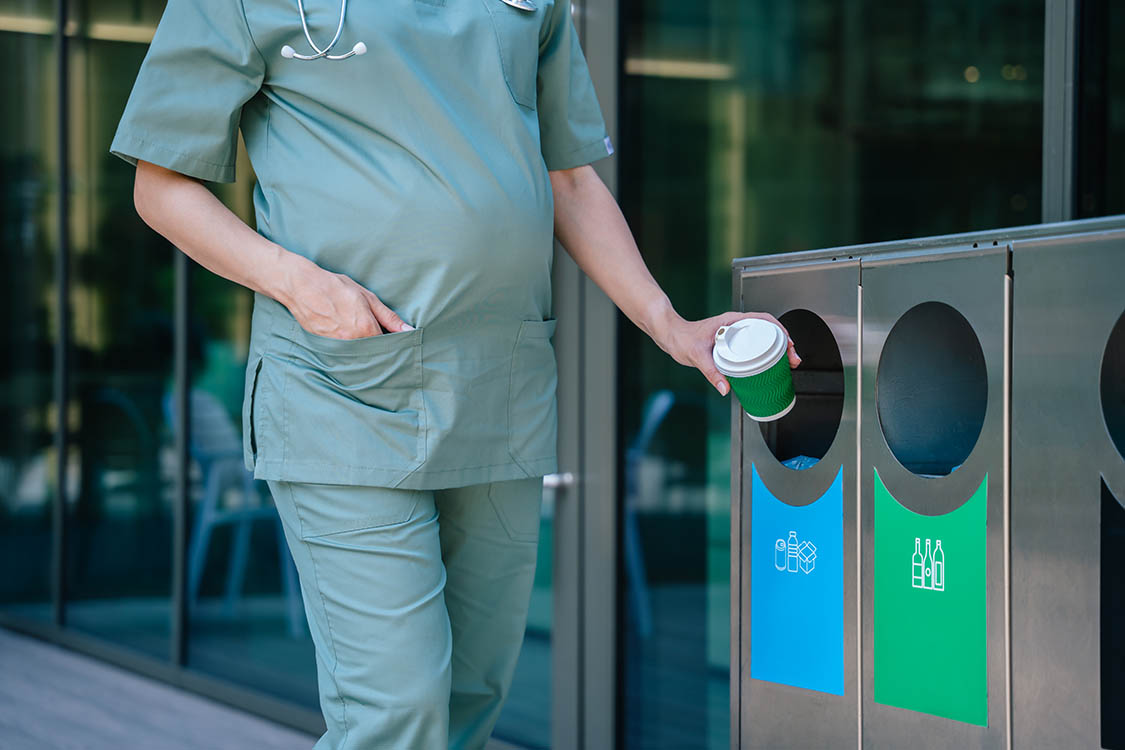
Sustainability in EVS also means using better ways to deal with trash. Teams are taught how to properly sort recyclables, compostables, and waste for the landfill, often with the help of containers with clear labels and continued training.
Using fewer single-use items, such as paper towels and mop heads, can significantly improve the environmental impact of cleaning. Choosing options that can be used again and again, and being sure to wash them the right way, can extend the life of cleaning supplies and help create a more circular economy.
Many companies that manage buildings also conduct waste assessments to assist EVS teams in identifying areas for improvement. By recording how much trash is made and how much is diverted, businesses can improve their programs and set sustainable goals that they can reach.
The Role of Commercial Cleaning Services
Collaborating with industrial cleaning services is a smart way for many businesses to become more environmentally friendly. Usually, these businesses have the tools, credentials, and knowledge to quickly and effectively put best practices for sustainability into action. Professional cleaners are important partners when it comes to being environmentally friendly because they use EPA Safer Choice-certified products and energy-efficient machines.
Commercial cleaning services that you can count on also bring consistency and responsibility. Many commercial cleaning services provide green certifications, performance reports, and compliance tracking that align with a building’s overall sustainability goals. Businesses that want to get or keep LEED or WELL Building certifications may need these relationships to meet and maintain those standards.
Integrated Support from Facility Maintenance Companies
The cleaning crew isn’t the only ones who care about sustainability. Many companies that manage buildings offer comprehensive services that incorporate EVS efforts into the overall sustainability goals of those buildings. These businesses can plan repair times for lighting, HVAC, plumbing, and energy systems so that they work at their best and cause the least amount of damage to the environment.
Preventive repair ensures that unnoticed problems do not undermine conservation efforts, such as inspecting water systems for leaks or inefficiencies. Maintenance teams can also suggest eco-friendly changes that save energy and water over time, like low-flow faucets or lighting that turns on when motion is detected.
Maintenance companies help make a facility more sustainable by working together with EVS teams to make sure that sustainability is thought out in every part of the building.