
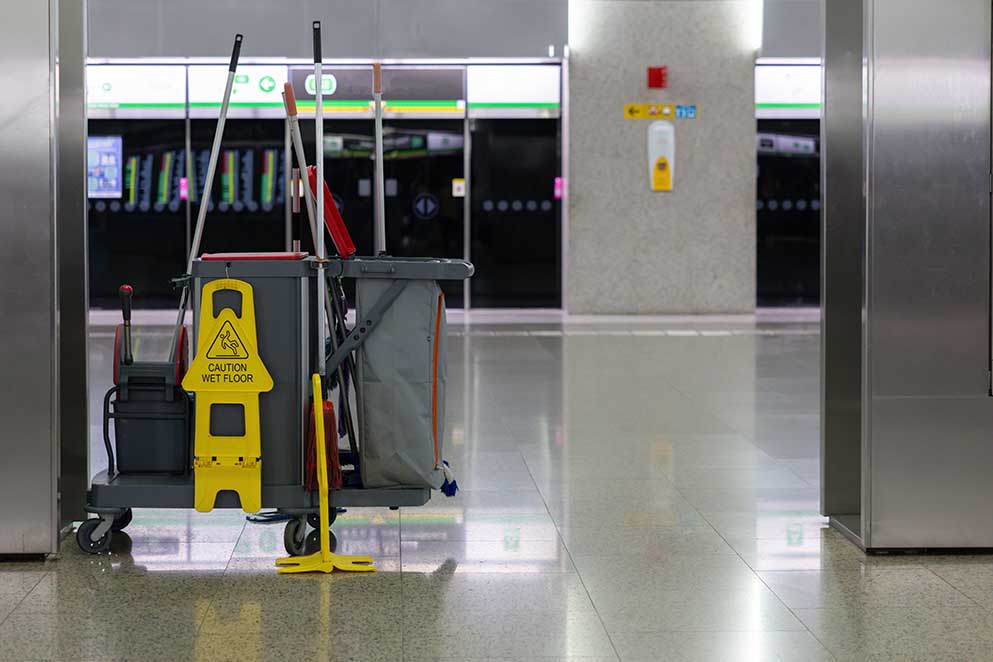
People judge municipal cleaning programs by what they can see, and visible standards in public buildings matter. The work that holds those visible standards steady runs underneath the surface. Planning, coordination, and performance management are where it happens. A strong municipal cleaning program runs on more than routine. The program adapts to how the building gets used and to whatever the day throws at it. This level of control asks for more than basic janitorial service.
Servicon builds programs that focus on how cleaning supports the full operation of a municipal facility, not only its appearance. That means flexible cleaning schedules and services calibrated to the building’s flow through a 24-hour cycle.
Cleaning That Matches How Buildings Are Actually Used
Municipal buildings rarely run on a simple schedule. A city hall has quiet mornings and busy afternoons, with evening council meetings stretching the day further still. Other public buildings, like a public works yard or a 24-hour custody operation, never get the luxury of a slow stretch. Cleaning programs have to reflect these patterns.
Instead of fixed routines, an effective program aligns service with real usage. High-traffic areas pick up more attention during peak hours. Lower-use spaces are serviced at appropriate intervals without burning resources that should be allocated elsewhere. The approach lifts efficiency and keeps the most visible areas in good condition when the public arrives. When cleaning up lines to match how people use the building, results improve without the budget changing.

The Role of Daytime Cleaning in Public Spaces
Many municipal facilities benefit from having cleaning staff present during operating hours. Day porters play a key role in keeping order while the building is in use. They catch issues as they surface. A spill in a public lobby or a restroom that needs resetting between booking waves gets addressed in the moment rather than at the end of the shift. A trash bin filling up during a busy hour is the same. The result is fewer complaints and a building that keeps moving without interruption.
Daytime cleaning also shapes public perception. Visitors see the building as actively maintained, which carries weight for the agency that operates it.
Coordination With Maintenance and Facility Teams
Cleaning teams have to work in step with other departments. Maintenance crews and facility managers shape how a building operates. Security staff and Watch Commanders set the rules for when and where work can take place. Effective communication across these groups accelerates problem-solving. A cleaner who notices recurring water on the floor can flag it to maintenance before it turns into a slip-and-fall claim. Coordination with security ensures restricted areas are handled correctly, including spaces that require an escort or a controlled-movement window.
This level of coordination makes cleaning part of the facility’s broader system rather than a service operating on the side.
Turning everyday spaces into brilliant success stories.
Technology That Keeps Everyone Aligned
Modern municipal cleaning programs run on simple, focused technology. The point is to improve visibility and communication for the people who need it. Supervisors track completed work in real time. Facility managers review performance without waiting for the end-of-month report. Issues are logged and closed within the same digital trail.
Digital tools answer the questions that come up most often during a review. Did the work get completed and signed off? What problems surfaced, and have the corrective actions been closed within the 24- to 48-hour window? Shared access to the same information improves accountability and removes the lag between a question being asked and an answer being defensible.

Adapting to Events and Changing Conditions
Municipal buildings host community meetings, public events, court calendars, and unplanned incident responses. These create traffic shifts that change cleaning needs hour by hour. A flexible program prepares for these changes in advance. Cleaning schedules flex to support event setup and breakdown, and staff get redeployed where the volume calls for them. High-use areas receive more frequent service during peak periods.
Weather plays a role, too. Rain pushes mud into entryways, and wildfire smoke loads filtration systems and floors with fine particulate matter that must be removed from high-touch surfaces before it reaches anyone’s lungs. A responsive cleaning team adjusts its focus to keep entryways and common areas safe under whatever conditions arise. The ability to adapt this fast is what separates a basic service from a managed program.
Supporting a Consistent Experience Across Facilities
Many public agencies operate dozens of buildings across a region. Each location may serve a different purpose, but all answer to the same standard. A well-structured cleaning program creates that consistency.
Processes stay standardized while leaving room for site-specific adjustments. Each facility receives service shaped to its function, all inside the same overall framework. Leadership keeps control across the portfolio without sacrificing the flexibility a single site sometimes needs. Consistency builds confidence. Facility managers know what to expect from one week to the next, and the public encounters the same level of care across every building they visit.

Managing Costs Through Smarter Operations
Cost control is part of every municipal services conversation. Cleaning programs have to operate within budget while maintaining quality. The way to do that is by using resources well. Scheduling follows actual demand rather than assumptions about it. Staff are placed where the volume requires them. Time goes to high-impact work rather than padding low-traffic areas with hours that nobody asked for. Over time, this approach produces better outcomes without inflating spend. The dollars track to the work that protects health and safety, and the agency’s standing follows.
Building Accountability Into Daily Operations
Accountability runs through the daily routine rather than waiting for an inspection to demand it. Supervisors monitor performance as work is being completed. Issues are addressed in the moment rather than parked for someone to review later. Staff understand expectations and follow clear procedures because the procedures themselves are clear. This creates a culture where quality is maintained at all times. When accountability is woven into the process, results become more reliable because the team works to a known standard every shift, regardless of who is walking the floor that day.

Continuous Improvement Without Disruption
Municipal cleaning programs have to evolve without breaking daily operations. Small adjustments compound into meaningful improvements over a quarter or two. Feedback from facility managers and frontline staff highlights what needs attention, and inspection data flags the patterns that prose feedback can miss. Changes get tested and refined before they roll out across every building. That may involve adjusting a schedule or updating a procedure based on the way intake volume has shifted over the past month. The goal is steady gains rather than the kind of constant change that erodes confidence in the program.
Turning everyday spaces into brilliant success stories.
Servicon Supports the Mission of Municipal Facilities
Municipal buildings exist to serve the public. Cleaning programs should support that mission rather than create more work for the staff who already carry it. When facility leaders can leave cleaning to a managed operation, they can devote their hours to the responsibilities only they can handle. Servicon builds programs that run with this level of independence and reliability. The focus remains on consistent performance and environments that reflect the standards the public expects of a government building.
A municipal cleaning program functions as a dependable part of how the building runs every day. The clean floors are the easy part to see. The reliability of their systems keeps the facility ready for whatever Tuesday brings.