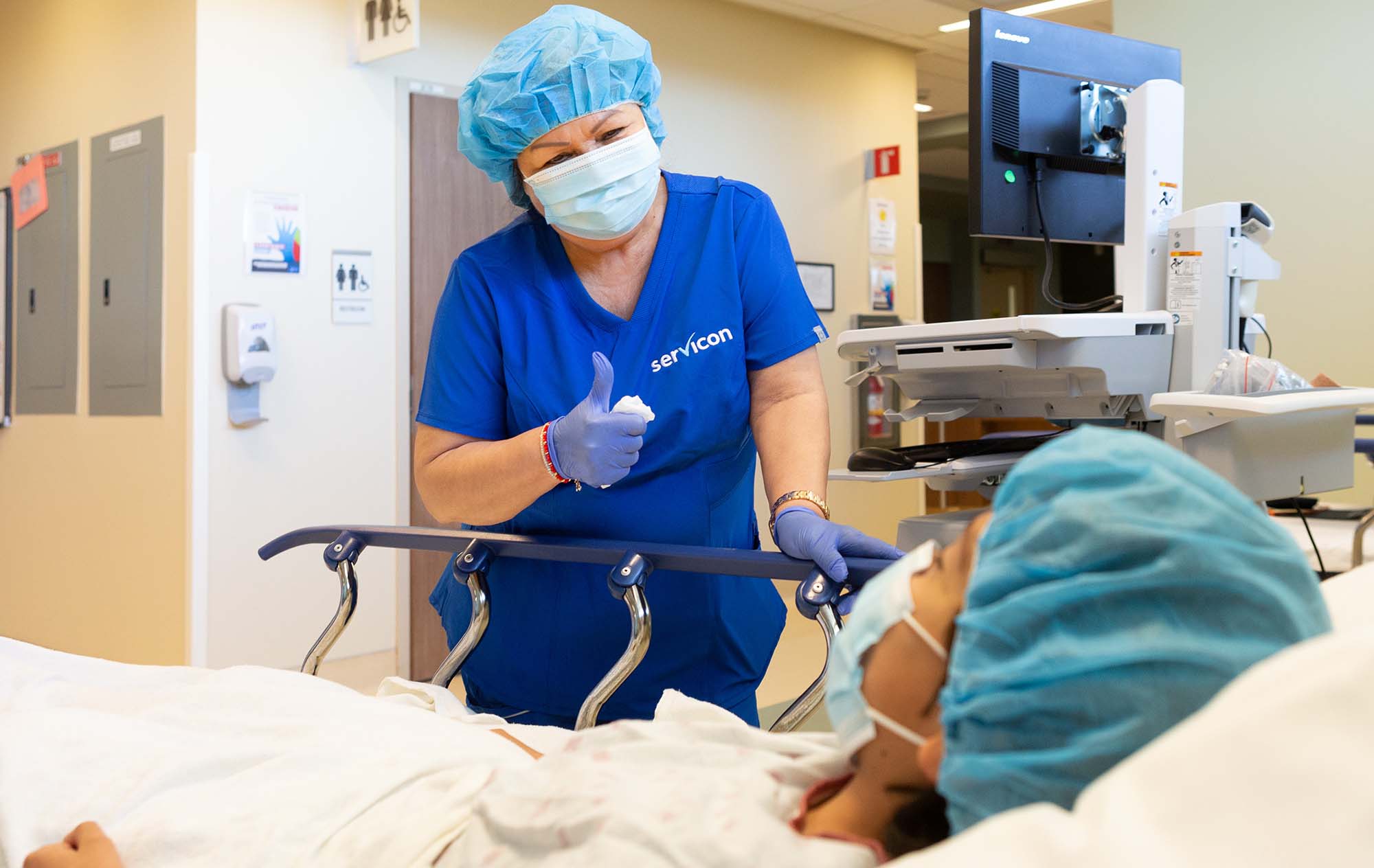
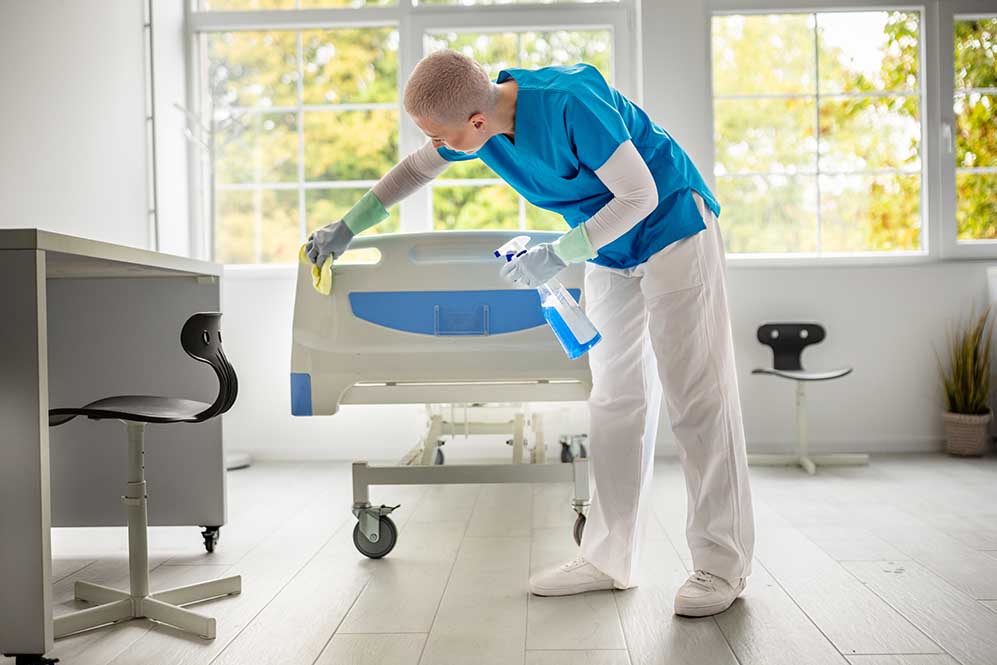
Healthcare facilities that invest in EVS training observe measurable improvements in patient satisfaction, staff morale, and safety outcomes. Clear processes reduce errors, enhance self-assurance, and encourage consistent performance. Training establishes a direct link between clinical success and healthcare housekeeping quality.
How Does EVS Performance Influence HCAHPS Scores?
Patients anticipate tidy rooms, secure surroundings, and courteous service. HCAHPS surveys ask patients to rate their overall hospital experience and the cleanliness of their rooms. Patient trust, reimbursement, and hospital reputation are all impacted by these scores.
EVS teams control many of the variables that affect these scores. Dust-free surfaces, tidy rooms, and clean restrooms influence patient comfort. Strong training guarantees that employees adhere to uniform cleaning procedures and promptly attend to patient needs. HCAHPS cleanliness scores often increase by 10-20% in hospitals that improve EVS performance.

Why Does Training Improve Cleaning Quality?
Staff members learn proper cleaning, disinfection, and safety techniques through training. Clear instructions encourage teams to focus on high-touch surfaces and comply with contact time requirements. This accuracy lowers contamination and enhances disinfection outcomes.
Employees with proper training know why every step counts. This information decreases shortcuts and increases compliance. Teams reduce rework and increase consistency when they finish tasks correctly the first time.
How Does EVS Training Reduce Nosocomial Infection Risk?
Contaminated surfaces, air, and shared equipment are how nosocomial infections spread. EVS teams reduce this risk by using appropriate chemicals and following standardized cleaning procedures. Training guarantees that employees use disinfectants appropriately and adhere to isolation cleaning protocols.
Infection rates can drop by up to 30% in hospitals that invest in EVS education. These improvements lower treatment costs while protecting patients. Furthermore, clear training programs support HAI Reduction Programs and ensure regulatory compliance.

What Role Do High-Touch Surfaces Play in Patient Safety?
High-touch Surfaces gather microbes through continuous contact. Frequent transmission points include door handles, light switches, call buttons, and bed rails. Regular cleaning reduces the chance of infection.
Start your journey toward safer, more compassionate cleaning.
Employees who receive training are better able to recognize and rank these areas. Teams are trained on proper surface coverage and cleaning order. Supervisors use audits to confirm findings. This emphasis improves patient satisfaction and safety.
Key high-touch areas include:
- Bed rails and tray tables
- Call buttons and remotes
- Door handles and light switches
- IV poles and monitoring equipment.
How Does Proper Contact Time Improve Outcomes?
The time disinfectants remain in contact with the surface to eradicate pathogens is known as contact time. Employees must let surfaces stay moist for the duration of the dwelling. Reduced contact time reduces the product’s efficacy.
Training reinforces surface coverage and correct spray technique. Supervisors monitor compliance during inspections. Hospitals that prioritize contact time achieve higher audit scores and lower contamination levels.
How Do Advanced Technologies Support EVS Training?
Technology facilitates training by reiterating proper procedures. After manual cleaning, UV-C disinfection systems provide an additional degree of protection. Teams acquire the skills necessary to implement these systems and confirm cycle completion.
Between cleanings, antimicrobial surface coatings offer ongoing protection. Staff members receive training in proper maintenance and inspection of coated areas. These technologies boost patient confidence and reinforce general infection prevention strategies.
How Does EVS Training Improve Staff Morale?
Training increases competence and self-assurance. Employees who are familiar with procedures feel more confident in their positions. Having clear expectations reduces stress and uncertainty.
Effective training initiatives also enhance teamwork. Employees work together more successfully and communicate more effectively between shifts. Hospitals that invest in training report increased engagement and lower turnover. Stronger performance and more reliable outcomes result from higher morale.

What Do Case Studies Reveal About EVS Training?
Hospitals that use organized EVS training programs frequently see improvements quickly. After launching a training program, a multi-site health system reported a 15% increase in HCAHPS cleanliness scores within six months. Additionally, infection rates decreased by 25%.
To increase isolation cleaning compliance, a different regional hospital employed focused training. The facility reduced bed turnover times and isolation room audit failures by 40%. These findings demonstrate the connection between operational effectiveness, safety, and training.
How Can Hospitals Strengthen EVS Training Programs?
Performance reviews, refresher courses, and onboarding are all components of successful training programs. Leaders must continue to educate and assist. Expectations are reinforced through regular coaching and clear documentation.
Key training elements include:
- Standardized cleaning procedures
- Chemical handling and PPE use
- Isolation cleaning protocols
- Audit feedback and coaching.
These steps support sustained improvement and accountability.
Why Does EVS Training Support Risk Reduction?
Reducing risk requires constant performance. Training ensures employee adherence to procedures that safeguard patients and facilities. Clear instructions reduce errors that lead to contamination or harm. Investing in EVS training helps hospitals increase patient trust, decrease compliance findings, and lower infection rates. This investment helps achieve both financial and safety objectives.
EVS training leads to higher HCAHPS scores and contributes to the creation of safer healthcare facilities. EVS training improves infection prevention, staff morale, and patient satisfaction. Hospitals that invest in education achieve higher HCAHPS scores, reduced infection rates, and safer care settings.
EVS that strengthens every corner of your hospital
- Benefits of Outsourcing EVS
- Hospital Hygiene
- EVS Contract Models
- Importance of Hospital EVS
- Advanced Technology in Hospital EVS
- Impact of EVS
- Hospital Housekeeping
- EVS Metrics and Outcomes
- Smart Inspection & Facility Monitoring
- Infection Prevention & Terminal Cleaning
- Healthcare EVS Training & Quality Assurance