
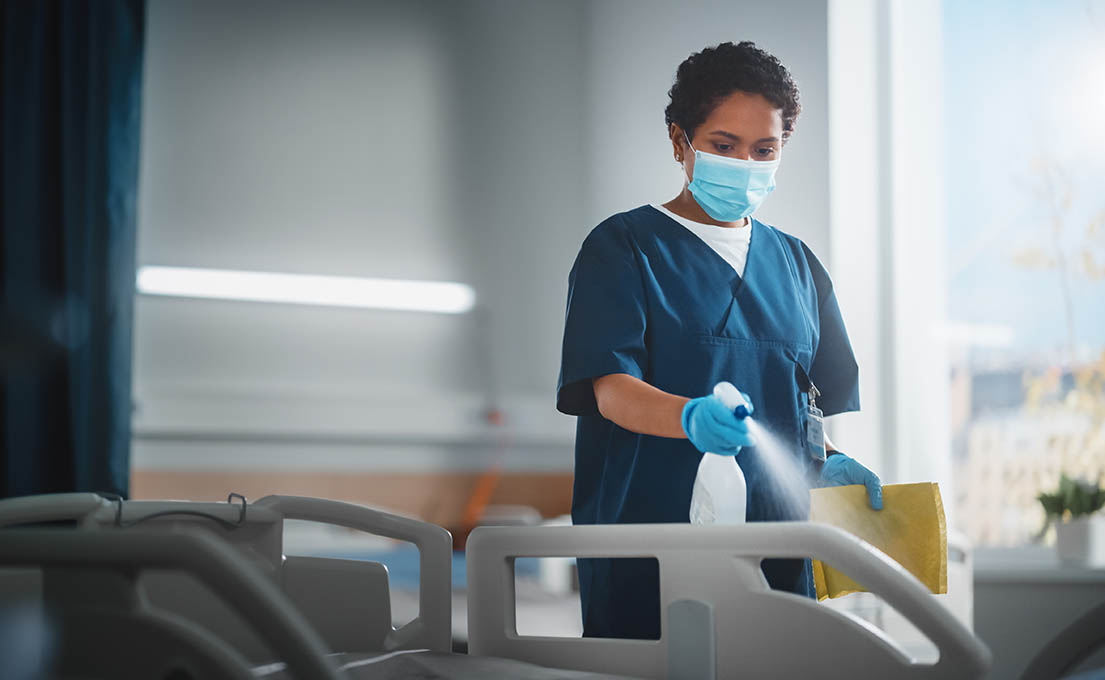
Hospital settings are evolving. Facilities operate at a speed that leaves little opportunity for error, patient expectations are higher, and regulatory standards are more stringent. Hospital environmental services must deliver reliable, quantifiable outcomes every day in this context. These demands cannot be satisfied by traditional methods alone. Smart inspection, environmental services technology, and automation that promote safer, more effective care settings are the cornerstones of EVS’s future.
Servicon views EVS as a networked system. To enhance performance throughout the facility, people, procedures, and EVS technology collaborate. Adopting new tools is only one aspect of this change. It is about utilizing technology and data to make the healthcare system safer, cleaner, and more accountable.
The Reasons Behind the Development of Hospital Environmental Services
Hospitals are intricate systems with a continuous flow of personnel, equipment, and patients. Shared areas, high-touch surfaces, and frequent room turnover increase the risk of contamination. Teams that provide environmental services are responsible for reducing that risk without sacrificing effectiveness. Healthcare organizations also have to deal with budgetary restrictions and staffing issues. These demands necessitate more intelligent resource management strategies. The framework required to satisfy these demands is provided by environmental services technology. It facilitates consistent execution, lessens variation, and increases visibility.
Data-driven cleaning is already becoming the norm. Patient outcomes, efficiency, and compliance are all improving in hospitals that use EVS technology.
What Is Promoting EVS Technology Adoption?
Hospitals are investing in cutting-edge solutions for several reasons. Preventing infections is still of utmost importance. Healthcare-associated infections can compromise patient safety and increase costs. Precise, consistent cleaning procedures are necessary to lower these risks. Transparency is also becoming increasingly necessary. Hospital administrators want a clear picture of cleaning performance. They must be aware of the areas, frequency, and quality of cleaning. Intelligent inspection systems provide this level of detail.
Start your journey toward safer, more compassionate cleaning.
Workforce issues can also be addressed with the aid of technology. While increasing consistency, automated tools, and guided workflows lessen the workload for employees. As a result, teams can concentrate on important tasks that require human attention.
How EVS Is Changing Due to Smart Inspection
One of the most significant advancements in hospital environmental services is smart inspection. Digital systems that monitor and validate cleaning performance in real time replace manual audits.
Standardized Assessment
Cleaning quality is assessed by digital inspection tools using uniform standards. Supervisors can record findings, score tasks, and monitor departmental outcomes. This establishes a precise performance standard. Standardization guarantees that all areas are assessed using the same criteria and lessens subjectivity.
Instantaneous Feedback
Staff members receive instant feedback from intelligent inspection platforms. A task can be swiftly corrected if it is overlooked or done incorrectly. This enhances overall quality and lowers the possibility of contamination. Additionally, managers can spot patterns and take action before problems worsen thanks to real-time data.
Information for Ongoing Improvement
Over time, inspection data creates a record of performance. Cleaning procedures, training, and resource allocation can all be improved using this data. Based on real data, hospitals can transition from reactive cleaning to proactive management.

Workflow Optimization and Environmental Services Technology
Technology for environmental services extends beyond inspection. It facilitates every step of the cleaning process, from assigning tasks to monitoring their completion.
Electronic Task Management
Contemporary EVS systems assign tasks according to current demands. For instance, the system can set up terminal cleaning for that room automatically when a patient is released. Employees are given precise instructions on what must be done and when. This guarantees that rooms are prepared for the next patient and minimizes delays.
Staff Mobile Access
EVS teams access schedules, checklists, and updates via mobile devices. This minimizes communication gaps and keeps everyone in sync. Additionally, mobile access enables employees to report issues, such as spills or equipment malfunctions, promptly.
Hospital System Integration
Advanced EVS technology can be integrated with hospital systems, including patient tracking and bed management. As a result, information flows smoothly, facilitating effective operations. Cleaning is integrated into the entire patient care process when systems are linked.
Automation in Medical Cleaning Services
The way cleaning tasks are carried out is changing due to automation. It lessens the physical strain on employees while increasing consistency.
Self-governing Cleaning Devices
Nowadays, many healthcare facilities have robotic floor cleaners. These devices follow predetermined paths and adapt to their surroundings. They deliver reliable cleaning results and free up employees to focus on more complex tasks. Large spaces such as hallways and waiting rooms are particularly well-suited for autonomous equipment.
Tools for Automated Disinfection
Automated systems guarantee that surfaces receive the necessary contact time and that disinfectants are applied correctly. This leads to increased cleaning efficiency and reduced employee variance. Automation makes it easier to uphold high standards even in hectic times.
Encouraging Employee Productivity
EVS teams are not replaced by automation. It helps them. Technology enables employees to focus on areas that require critical thinking and attention to detail by automating repetitive tasks. This balance enhances both efficiency and quality.

Data’s Function in EVS Decision-Making
The core of contemporary hospital environmental services is data. It offers the knowledge required to oversee cleaning operations efficiently.
Measures of Performance
Key performance indicators monitor response times, cleaning quality, and protocol compliance. These metrics give managers a better understanding of the EVS program’s performance. Clear metrics also support accountability within the team.
Forecasting Perspectives
Based on patterns and trends, data can be used to forecast cleaning requirements. High-traffic areas, for instance, might need more frequent maintenance. Teams can deploy resources where they are most needed thanks to predictive insights. This proactive strategy lowers risk and increases efficiency.
Compliance and Reporting
Comprehensive reports serve as documentation for legal requirements. Hospitals are able to show that they are meeting and upholding cleaning standards. This degree of openness fosters trust and supports accreditation.

Using Technology to Improve Patient Safety
Enhancing patient safety is the main objective of EVS technology. Clean surroundings promote better results and lower the risk of infection.
Regular Cleaning Procedures
Cleaning procedures are consistently followed thanks to technology. The likelihood of missing steps is decreased by checklists, automation, and monitoring systems. In healthcare settings, where minor mistakes can have major repercussions, consistency is essential.
Quicker Reaction Times
EVS teams can react swiftly to cleaning requirements thanks to real-time systems. Tasks can be completed quickly, regardless of whether it’s a spill, contamination event, or room turnover. Reduced exposure to possible risks results from quicker reaction times.
Enhanced Interaction
Departmental communication is enhanced by connected systems. Information sharing between EVS teams, nursing staff, and facility managers is simple. A safer and more effective environment is supported by this partnership.
EVS Technology Adoption and Training
Adopting new technology necessitates a strong emphasis on change management and training. Employees need to know how to integrate tools into everyday tasks and how to use them efficiently.
Programs for Practical Training
Clear guidelines and practical instruction should be combined in training. Employees must understand the importance of technology in addition to how to use it. Engagement is increased when the impact on patient safety is understood.
Continued Assistance
Training must change as technology does. Staff members are kept up to date on new features and best practices through ongoing education. Support networks also assist in resolving issues as they come up.
Increasing Self-Belief
Adoption increases when employees feel comfortable utilizing EVS technology. All throughout the facility, this results in improved performance and more robust outcomes.
Start your journey toward safer, more compassionate cleaning.
How Servicon Will Drive EVS’s Future
Servicon creates a unified EVS strategy by combining automation, environmental services technology, and smart inspection. Delivering dependable, data-driven outcomes that assist hospital operations is the main goal. Servicon assists healthcare facilities in upholding strict standards of hygiene and security by combining cutting-edge equipment with skilled personnel. Because of the approach’s flexibility and scalability, each hospital can implement solutions that best suit its needs.
Servicon is aware that technology is just one component of the answer. Aligning people, processes, and tools to produce consistent results is the key to success.
How Will EVS Technology and Data Shape the Future of Hospital Environmental Services?
EVS technology, data-driven decision-making, and smart inspection will define the future of hospital environmental services. These developments are changing the way cleaning is carried out, tracked, and enhanced. By investing in environmental services technology, hospitals can increase their efficiency, compliance, and visibility. More significantly, they make staff and patients’ surroundings safer.
EVS will be essential to providing high-quality care as healthcare continues to change. Hospital environmental services can meet today’s challenges and get ready for tomorrow’s demands with the right combination of technology and knowledge.