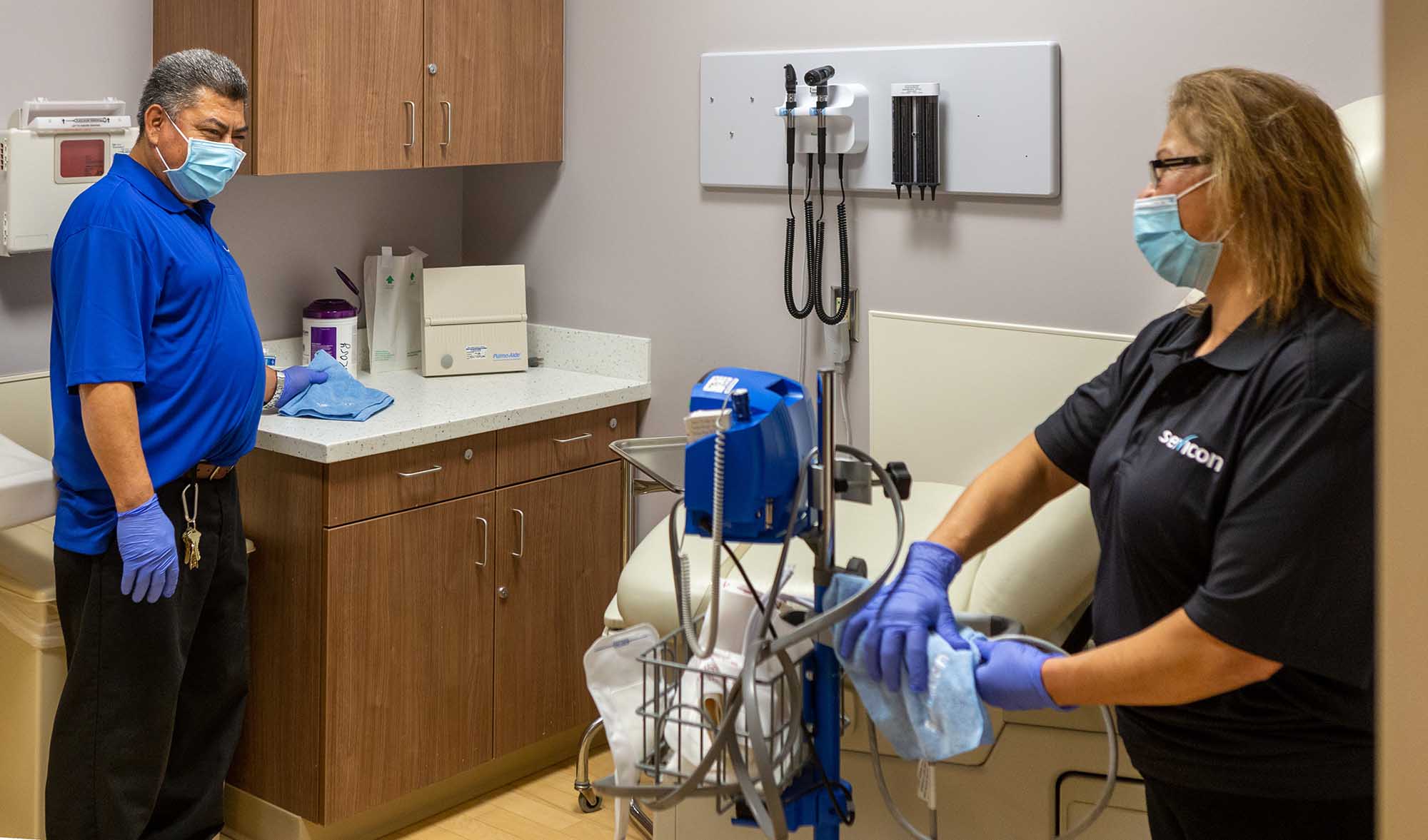

There is pressure on hospitals to provide better care while keeping costs under control. They also have to deal with increased patient expectations, staffing shortages, and more stringent infection control regulations. Hospital cleaning services are increasingly outsourced due to these difficulties, as many healthcare executives believe outsourcing can improve patient safety, operational effectiveness, and the overall experience by leveraging specialized expertise and resources.
Environmental services (EVS) hospital teams directly impact patient safety, operational effectiveness, and the overall experience. Many healthcare executives now view outsourcing as a viable solution to improve outcomes across all three areas: enhancing patient safety, increasing operational effectiveness, and improving the overall experience for patients and staff.
What is EVS for Hospitals
Hospital environmental services teams are responsible for maintaining, cleaning, and disinfecting medical facilities. This covers waiting areas, operating rooms, patient rooms, and high-touch surfaces like door handles and bed rails. To lessen contamination and promote infection prevention, these teams adhere to stringent protocols. EVS hospital teams also manage floor care, waste management, and patient flow-related support services in many hospitals. Their work directly impacts patient satisfaction ratings, hospital-acquired infection rates, and regulatory compliance.
Start your journey toward safer, more compassionate cleaning.
Why Are In-House Cleaning Practices Being Redesigned in Hospitals?
The complexity of managing an internal EVS hospital program has increased. It is more difficult to locate and keep qualified employees when there is a labor shortage. Training initiatives need supervision and time. Simultaneously, infection control guidelines are constantly changing, necessitating continuous training and procedure modifications, which can further strain resources and complicate the already challenging task of maintaining a qualified workforce during a labor shortage.
In addition, hospitals have to deal with inconsistent performance throughout shifts, overtime expenses, and scheduling gaps. The risk to patient safety rises when cleaning quality varies. Many hospitals are looking into outsourcing cleaning services to stabilize operations in response to these problems.
How Outsourcing Lowers Expenses
One of the primary motivations for outsourcing environmental services in hospitals is cost control. Outsourced suppliers offer defined performance metrics, trained personnel, and organized procedures. This increases productivity and decreases waste. Because the service provider manages staffing, labor costs become more predictable. Hospitals avoid paying for hiring, onboarding, and employee turnover. Additionally, they lower overtime expenses, which frequently rise during staffing shortages. Additionally, outsourcing reduces the cost of supplies and equipment. Providers usually oversee procurement and maintain inventory control through standardized systems. These efficiencies eventually result in quantifiable savings without sacrificing quality.

Resolving Staffing Issues
One of the main problems facing healthcare today is staffing shortages. Jobs at EVS hospitals are physically taxing and often have high turnover rates. This leads to gaps that may impact response times and cleaning consistency. Outsourcing hospital cleaning services transfers this responsibility to a provider with specialized hiring and training procedures. These companies prioritize workforce stability and frequently have greater access to talent pools. They are able to maintain steady staffing levels and fill positions more quickly. Outsourced teams frequently receive specialized training in healthcare cleaning procedures. This ensures that employees are aware of safety regulations, infection control, and proper disinfectant use. A more dependable and competent workforce is the outcome.
Enhancing Patient Safety and Infection Control
Every healthcare setting must prioritize infection prevention. Longer hospital stays, increased expenses, and major health risks can result from hospital-acquired infections. One of the most crucial strategies to lessen these effects is thorough cleaning. Hospital teams that provide outsourced environmental services adhere to standard cleaning procedures created to satisfy stringent healthcare regulations. These include consistent room turnover procedures, careful attention to high-touch surfaces, and appropriate contact times for disinfectants. Additionally, many providers employ cutting-edge equipment such as digital inspection systems, electrostatic sprayers, and UV disinfection systems. Cleaning is made more thorough and quantifiable with the aid of these technologies. Hospitals can lower the risk of infection and enhance patient outcomes by increasing consistency and supervision.
Improving Quality with Standardization
Due to staffing shortages and training disparities, quality is often uneven across internal EVS hospital programs. Standardized procedures introduced through outsourcing enhance uniformity throughout the hospital. Service providers utilize clear procedures, checklists, and performance monitoring systems. Supervisors monitor the quality of cleaning and provide immediate feedback. Accountability and ongoing development result from these measures. Digital tools are also important. Many providers use mobile apps to monitor response times, audit results, and track finished tasks. Hospitals can use this data to assess the performance of their cleaning services and identify areas for improvement.
Effect on the Experience of Patients
Cleanliness is one of the first things patients notice when they enter a hospital. It directly affects how they view the quality of care. Surveys such as HCAHPS include questions about cleanliness, which influence hospital ratings and reimbursement. Outsourced EVS hospital teams focus on delivering a consistent and high standard of cleanliness. Faster room turnover means patients spend less time waiting. Well-maintained spaces create a safer and more comfortable environment. When patients feel confident in the cleanliness of their surroundings, their overall experience improves. This leads to better satisfaction scores and stronger trust in the hospital.

Supporting Compliance and Accreditation
Hospitals must meet strict standards set by regulatory agencies and accreditation bodies. Environmental services hospital teams play a key role in meeting these requirements by ensuring that the hospital maintains cleanliness and safety standards, which are critical for compliance with health regulations. Outsourced providers are familiar with healthcare regulations and best practices. They build compliance into their processes, which reduces risk for the hospital. Regular audits, documentation, and reporting play a crucial role in consistently meeting standards. This level of oversight can be difficult to maintain with in-house teams, especially when resources are limited, leading to potential lapses in compliance and increased risk for the hospital. Outsourcing provides a structured approach that supports long-term compliance.
Flexibility and Scalability
Healthcare demand can change quickly. Seasonal surges, public health events, and patient volume shifts all affect cleaning needs. Hospitals need the ability to scale services up or down without disruption. Outsourced hospital cleaning services offer this flexibility. Providers can adjust staffing levels based on demand, ensuring that cleaning operations keep pace with patient flow. This is especially important during periods of high volume or emergency response. Scalability also supports long-term planning. Hospitals can adapt their environmental services and hospital strategies without making large internal changes, which is crucial for maintaining efficiency and responsiveness during periods of high volume or emergency response.
Start your journey toward safer, more compassionate cleaning.
Strategic Focus for Healthcare Leaders
Outsourcing allows hospital leadership to focus on core priorities such as patient care, clinical outcomes, and operational strategy. Managing EVS hospital operations internally requires time, oversight, and resources that could be directed elsewhere, thereby detracting from the hospital’s ability to prioritize patient care and improve clinical outcomes. By partnering with a specialized provider, hospitals gain access to expertise, technology, and proven processes. This supports better decision-making and long-term performance improvements. The shift toward outsourcing is not just about cost savings. It is about building a stronger, more reliable system that supports patient safety and operational efficiency, leading to enhanced patient satisfaction and reduced hospital-acquired infections.

The Future of Hospital Cleaning Services
The demand for high-quality hospital cleaning services will continue to grow. Infection control, patient expectations, and regulatory requirements are not slowing down. Hospitals need solutions that can keep up with these changes. Outsourced environmental services hospital teams are becoming a key part of this strategy. Outsourced environmental services hospital teams provide consistency, expertise, and scalability that in-house programs alone struggle to achieve. As healthcare continues to evolve, outsourcing EVS hospital operations will remain a practical approach for improving cost control, quality, and patient outcomes.