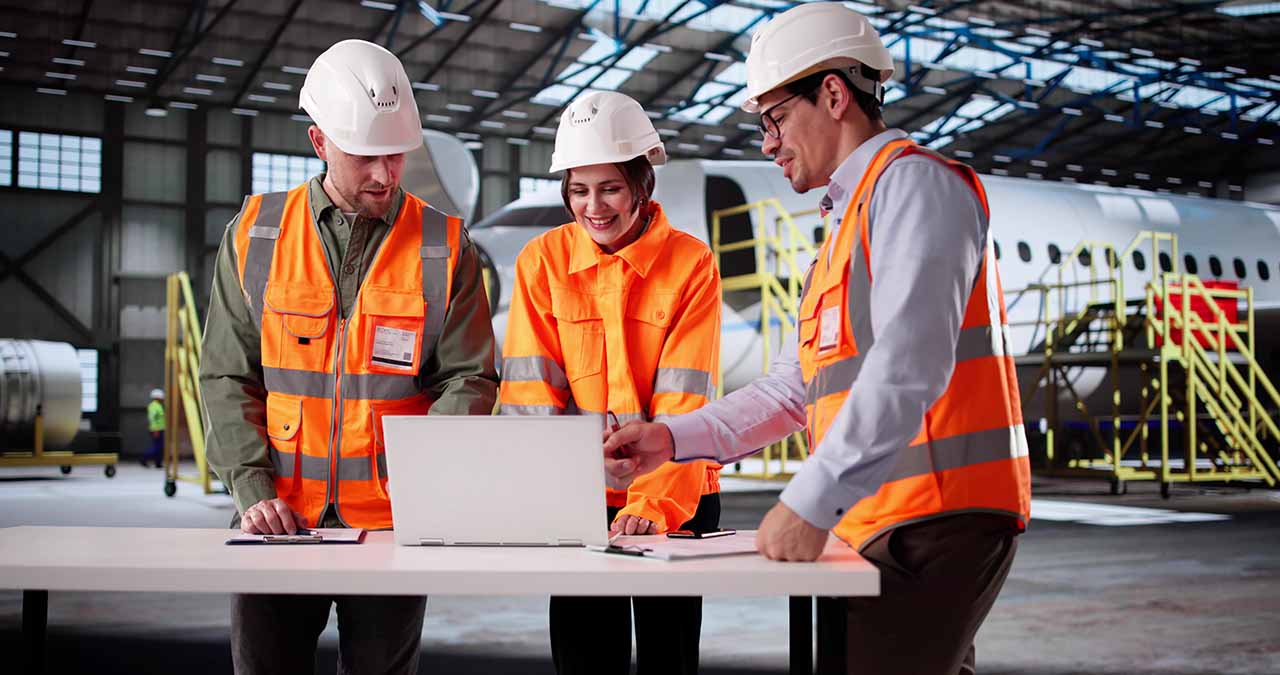
Aerospace manufacturing environments need to be safer than most other industrial settings. Inside these buildings, people do a wide range of work, including high-precision machining, making composites, assembling electronics, testing engines, and assembling aircraft or spacecraft. Each activity involves various risks, and strict safety rules must be followed to manage them. Aerospace companies expect all employees and contractors to know and follow strict rules, such as lockout/tagout procedures and confined-space entry rules.
Servicon helps many of the biggest aerospace companies in the country. We teach our teams to follow both our own safety rules and the rules set by each client. This dual commitment helps keep people, equipment, and mission-critical hardware safe. Safety is more than just what the law says. It is a necessary part of running a business well and is closely related to quality, efficiency, and dependability.

The Importance of Safety in Aerospace Production
In aerospace production, process control must be highly precise. Equipment breakdown, contamination, or mishandling of materials can all cause delays or loss of products that cost a lot of money. A strong culture of awareness, reporting, and ongoing training is what keeps the industry safe. Cleaning and maintenance teams need to learn to spot hazards, work safely, and collaborate with facility supervisors.
ae
Safety is a key component of all Servicon service plans. Our teams know how their work affects aircraft structures, spacecraft hardware, dangerous materials, and tightly controlled manufacturing processes. This information helps keep people safe while also advancing Aerospace Facility Maintenance’s bigger goals.
Lockout/Tagout in Aerospace Facilities
Lockout and tagout procedures keep workers safe by making sure that equipment doesn’t accidentally turn on while it’s being cleaned, serviced, or repaired. In the aerospace industry, this often includes CNC machines, hydraulic systems, test stands, robotic assembly lines, and high-voltage equipment.
Key elements include:
- Identifying all energy sources
- Isolating and locking equipment
- Tagging the lockout point with authorized information
- Verifying that the system is completely de-energized
- Restoring equipment only when all steps are cleared.
Servicon trains its workers on lockout/tagout and works with client teams to ensure they comply with the facility’s list of authorized personnel. In most aerospace settings, the client is responsible for the lockout/tagout program. Members of the Servicon team follow the rules, talk to their bosses, and only do their jobs after the area has been checked for safety.
Confined Space Procedures
Some aerospace manufacturing plants have pits, access tunnels, tanks, and ventilation spaces that require people to follow confined-space entry procedures before entering. There are unique dangers in confined spaces, including low oxygen levels, limited exits, and the risk of fumes or chemicals.
A proper confined space program includes:
- Hazard identification
- Atmospheric monitoring
- Entry permits
- Standby attendants
- Rescue plans
- PPE selection
- Communication protocols.
Most of the time, the aerospace client is still responsible for classifying, testing, and obtaining permission for confined spaces. Servicon trains its workers to work in tight spaces and sends specially trained workers when a job calls for them. We ensure our training aligns with the client’s program so both teams know what is expected of them.

Personal Protective Equipment in Aerospace Manufacturing
Depending on the job being done, different aerospace facilities have different PPE. Cleaning teams need to know how the type of material, the condition of the surface, and the location of the equipment all affect risk.
Some examples of PPE are:
- Safety glasses
- Face shields
- Cut-resistant gloves
- Chemical-resistant gloves
- Steel-toe footwear
- Anti-static clothing
- Respiratory protection
- Hearing protection.
Servicon includes PPE training in new employee orientation, coaching for supervisors, and daily shift briefings. We follow OSHA rules and make sure that each client’s PPE needs are met in their own space. This combined approach makes sure that production floors, cleanrooms, labs, and secure assembly areas are all safe to work in.
Safety Certifications and Required Training
Before employees can enter or work in manufacturing zones, aerospace companies often require them to have certain safety certifications. Some of these are:
- OSHA 10 and OSHA 30 courses
- Confined space awareness
- Lockout and tagout awareness
- Fall protection training
- Hazard communication
- Fire safety
- First aid and CPR
- Cleanroom behavior training
- FOD prevention training
- Electrostatic discharge awareness.
Servicon has a full safety training program that meets industry standards. We also work with aerospace clients to ensure our employees meet the additional requirements of working in specialized environments. This is very important in Aerospace Facility Maintenance because safety, cleanliness, and operational discipline must work together.

How Servicon Combines Its Safety Training with Client Requirements
Each aerospace facility has its own safety rules and training requirements. Because aerospace manufacturing has a very low tolerance for risk, some programs go above and beyond what the law requires. Servicon’s role is to establish a structured partnership between our internal safety program and the client’s training system. The process includes:
1. Discovery and Documentation
Before beginning work, Servicon meets with client safety leaders to understand the site-specific training matrix. This includes required certifications, access-level training, equipment-specific rules, and any task-based qualifications.
2. Division of Responsibilities
Together with the client, Servicon determines which training is provided by the client and which is handled by Servicon.
The client is typically responsible for training related to proprietary equipment, facility-specific hazards, classified access, and unique manufacturing protocols.
Servicon is responsible for industry-standard safety training, OSHA requirements, PPE training, chemical-handling training, cleaning-system training, and job-specific safety procedures.
3. Employee Onboarding and Verification
Servicon integrates both sets of training into the new-hire onboarding process. Employees receive internal safety courses, then complete client-provided courses before entering the facility.
4. Continual Alignment and Updates
Aerospace facilities frequently update their safety rules to reflect new equipment, new processes, or new regulatory expectations. Servicon stays aligned by holding regular meetings with client EHS teams, reviewing site incidents, and updating training materials.
5. Monitoring and Compliance Checks
Supervisors conduct daily checks to ensure PPE use, equipment safety, and behavior meet expectations. Client EHS teams often audit our work, and Servicon provides documentation that supports compliance.
This partnership creates a unified safety culture where both the client and the service provider share responsibility for maintaining a safe environment.
Who Is Responsible for What Training?
It’s easier to avoid gaps and ensure each worker gets the right training when responsibilities are clearly defined. Here is how it usually looks:
Client Responsibilities
- Training related to proprietary manufacturing equipment
- Facility-specific hazard awareness and site rules
- Classified access training and secure-environment behavior
- Emergency response plans
- Specialized aerospace or defense training modules
- Hazardous material rules tied directly to production processes
Service Responsibilities
- OSHA compliance training
- Lockout and tagout awareness
- Confined space awareness
- PPE selection and use
- Hazard communication
- Chemical safety
- Cleaning equipment safety
- FOD awareness
- Cleanroom entry and contamination control
- Supervisor-level safety leadership training
By combining these responsibilities, Servicon delivers a trained workforce that meets all regulatory and client-specific needs while supporting safe Aerospace Facility Maintenance.

How Servicon Ensures Ongoing Safety Performance
You don’t have to do safety performance just once. It is a top priority every day. Servicon maintains high safety standards across all its aerospace contracts through structured processes.
Our program includes:
- Daily safety briefings
- Weekly hazard reviews
- Ongoing field audits
- Digital incident and near-miss reporting
- Supervisor coaching
- Annual recertification for key safety modules
- Close communication with client safety teams
- Continuous improvement planning.
Servicon’s culture emphasizes responsibility, communication, and proactive hazard identification. This ensures that cleaning and maintenance activities support a safe and controlled manufacturing environment.
The Value of a Safety-Driven Partner
Aerospace companies need partners who know how their factories work and the risks that come with them. Servicon sends trained teams to work safely around sensitive hardware, controlled equipment, and complicated manufacturing lines. Our dedication to safety helps reduce risk, ensure we follow the rules, and keep both our employees and our clients’ operations safe.
Servicon builds a unified safety culture by combining standard training with client-specific expectations. This ensures that all workers in the building are aware of their responsibilities and act accordingly. When safety programs are in sync, the facility’s safety record stays strong, and operations are more reliable and efficient.