
Contamination Control Strategies for Aerospace Facilities
In aerospace, even tiny contaminants can threaten safety and mission success, so Servicon provides ISO-compliant contamination control with FOD prevention, HEPA filtration, advanced disinfection, and trained, cleared staff to keep facilities clean, compliant, and reliable.
Earning a client's trust is our greatest privilege.




The Critical Importance of Contamination Control
Precision is crucial in the aircraft industry. A single fiber, particle, or fragment of debris can compromise structural integrity, interfere with extremely sensitive systems, or result in flight mishaps. Cross-contamination and foreign object debris (FOD) remain two of the most significant threats to aerospace facilities. Contamination control plans must be strict, proactive, and backed by highly qualified experts, as billions of dollars and lives are at stake.
With our extensive experience in cleaning and maintaining major aerospace facilities, Servicon is a trusted expert in contamination control. Our techniques are designed to ensure the dependability of each test, launch, and mission, while also maintaining the integrity of mission-critical components and adhering to strict aerospace regulations.
Understanding FOD and Cross-Contamination Risks
Any loose object that has the potential to cause harm and does not belong in the environment is considered food-borne debris (FOD). FOD can appear in aerospace facilities as subtly as a small fiber landing on a delicate surface or as visibly as a tool abandoned on an assembly line. Both can have disastrous outcomes.
When particles, residues, or microbes move from one place to another, it’s known as cross-contamination. Cross-contamination is a significant issue in large aerospace operations, where cleanrooms and assembly lines often coexist. Cross-contamination can jeopardize schedule delays, regulatory standard compliance, and product integrity.
Servicon is aware that contamination may not always be apparent. Effective control strategies must handle both major and microscopic challenges to ensure aircraft operations remain uncompromised.
Where People Shine, and Purpose Thrives
Servicon’s Multi-Layered Contamination Control Approach
Three key pillars form the foundation of our contamination control strategies: continual improvement, monitoring, and prevention. This multi-layered strategy ensures that aeronautical facilities operate more reliably and with lower risk, while also meeting regulatory requirements.
1. Preventing Contamination at the Source
Prevention is the most effective line of defense against contamination. Our stringent gowning processes, entry and departure protocols, and training initiatives are designed to ensure that employees accessing restricted locations don’t bring pollutants with them. We also routinely clean floors, walls, ceilings, and workstations, and sanitize tools and equipment prior to use to reduce particle accumulation.
Additionally, we collaborate with aerospace partners to develop regulated processes that restrict the flow of materials between zones. It helps preserve the integrity of clean environments and lessens the chance of cross-contamination.
2. Advanced HEPA Filtration
One of the significant risks to aerospace manufacturing is exposure to airborne pollutants. Servicon utilizes High-Efficiency Particulate Air (HEPA) filtration systems that can trap 99.97% of tiny particles, including those as small as 0.3 microns.
To guarantee optimum efficiency, our professionals assist customers by cleaning and maintaining their HEPA filters. To maintain appropriate airflow and pressure differentials between clean and less regulated regions, we also create cleaning schedules that correspond with HVAC operations. Aerospace facilities can keep the air clean and meet ISO 14644 standards and other industry requirements by using HEPA filters in their contamination control systems.
3. Advanced Disinfection Protocols
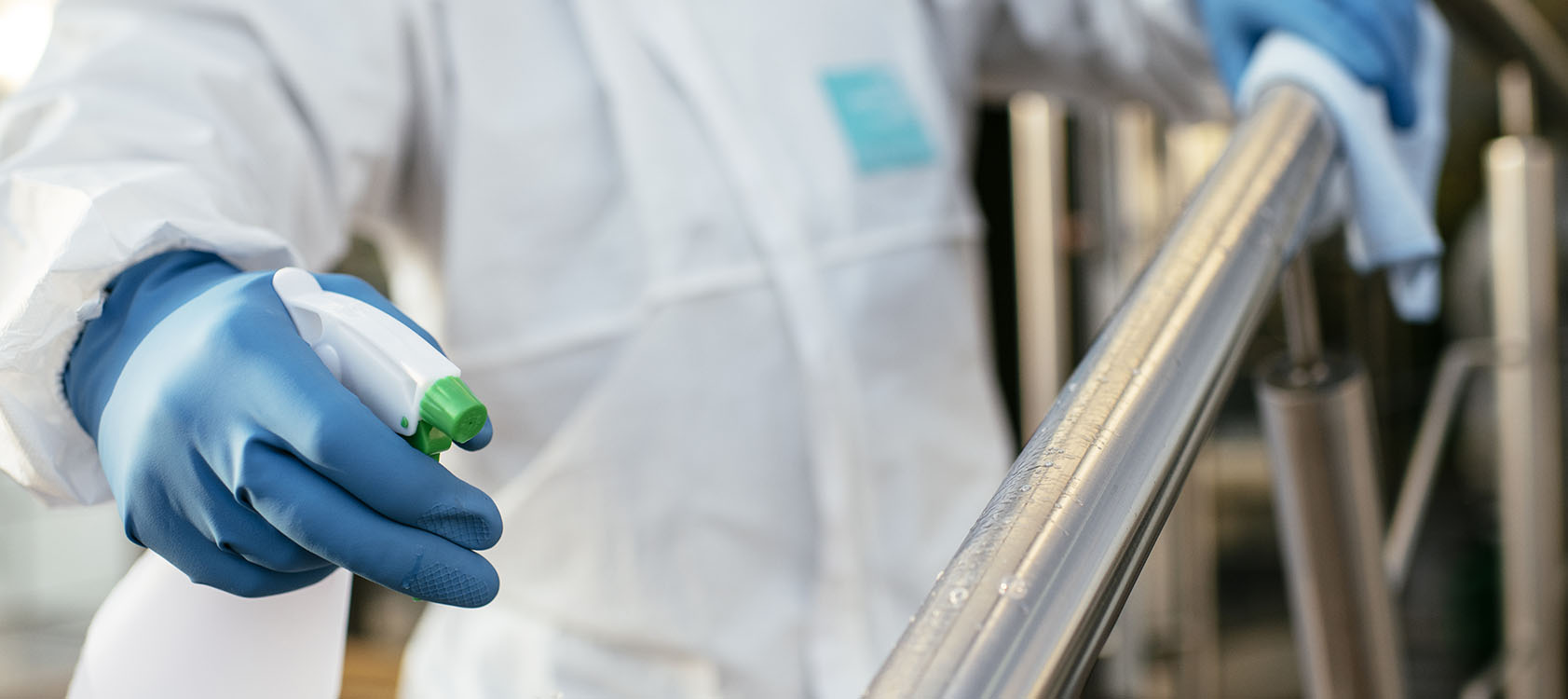
General cleaning is not enough for aerospace facilities. Servicon utilizes cutting-edge disinfection techniques specifically designed for sensitive environments. We use solvents and disinfectants authorized for aeronautical compatibility to prevent chemical harm and guarantee efficient decontamination.
To achieve maximum coverage, electrostatic sprayers and misting systems can be utilized in high-touch or wide areas. Our teams use sterile mopping systems, lint-free wipes, and precision cleaning equipment in cleanrooms and assembly areas to minimize contamination while avoiding the creation of new hazards.
4. Surface and Environmental Monitoring
A crucial component of contamination control is monitoring. To verify the efficacy of cleaning, Servicon assists aerospace partners with surface sampling and particle count testing. Using specialized monitoring technology, we can identify contamination patterns, highlight potential hazards, and adjust cleaning techniques as needed.
Besides ensuring compliance with ISO and aviation standards, regular monitoring provides facility managers with valuable insights to support audits and quality control efforts.
5. Continuous Improvement and Training
We understand that contamination control is not a static process. Standards, facility requirements, and aerospace technology are all subject to change. To stay ahead of new threats, Servicon invests in ongoing training and process enhancements.
Our staff members receive training in cleanroom procedures, FOD prevention, and contamination awareness. Our workers remain disciplined and prepared to handle changing challenges in aerospace facilities, thanks to regular performance assessments and refresher training.
Preventing FOD in Aerospace Facilities
In aerospace, preventing FOD is of utmost importance. A single loose object has the potential to damage delicate equipment or cause disastrous flight malfunctions. Servicon employs stringent cleaning and inspection procedures designed to eliminate waste before it becomes a threat.
Key FOD prevention practices include:
- Scheduled FOD walkdowns to identify and remove debris
- Precision vacuuming with HEPA systems to capture microscopic particles
- Tool and equipment cleaning to prevent residue transfer
- Strict material handling practices to minimize contamination from packaging or transport.
Our approach to FOD prevention is not reactive. It is a proactive strategy designed to prevent debris from ever entering controlled environments, thereby ensuring the safety and integrity of aerospace facilities.

Reducing Cross-Contamination Risks
Cross-contamination commonly occurs in large aerospace facilities with multiple process areas. By implementing stringent zoning, restricting entrance points, and implementing environment-specific cleaning procedures, Servicon helps mitigate these dangers.
For instance, to keep pollutants out of cleanrooms, gowning areas are well cleaned. To lessen the movement of particles or residues, hallways, communal workstations, and material staging spaces are specifically cleaned. These initiatives establish robust barriers that prevent pollution in vital areas.
The Role of Security and Compliance
Working in restricted or classified areas is a common part of contamination control in aerospace facilities. Servicon ensures that sensitive work can continue without interruption by providing workers who meet the necessary security clearance criteria. Additionally, our staff maintains thorough records that support certifications, quality assurance initiatives, and compliance audits.
Servicon provides aerospace partners with unparalleled value by combining cleared personnel with expertise in contamination control.
Sustainability in Contamination Control
In aerospace operations, sustainability is becoming increasingly significant. Without sacrificing effectiveness, Servicon incorporates environmentally friendly methods into its contamination control. It entails employing energy-efficient procedures, reducing the use of chemicals and water, and using environmentally friendly cleaning products.
These initiatives strictly adhere to aeronautical standards while also supporting the client’s sustainability objectives.
Why Aerospace Leaders Trust Servicon
With its decades of experience in maintaining major facilities for demanding industries, Servicon offers a unique value proposition in contamination control for aerospace facilities. Our services go beyond traditional housekeeping, ensuring that delicate activities can continue without the risk of cross-migration, contamination, or FOD.
Our commitment to accuracy, compliance, and training ensures that our aerospace partners can confidently focus on their objectives. Servicon safeguards the integrity of aircraft operations from the ground up by preventing FOD, managing cross-contamination, and utilizing cutting-edge cleaning techniques.
Contamination Control: A Mission-Critical Requirement in Aerospace
In the aircraft industry, contamination control is a mandatory requirement. It is a must for the mission. To keep aerospace facilities hygienic, legal, and prepared for success, Servicon employs a combination of preventative measures, HEPA filtration, sophisticated disinfection, and monitoring.
Aerospace companies benefit from working with Servicon in multiple ways. They acquire a reliable ally committed to upholding the strictest safety, hygiene, and dependability requirements in settings where accuracy is crucial.