
Critical Environment Sterilization for Aerospace Facilities
Earning a client's trust is our greatest privilege.





Why Sterilization Matters in Aerospace
The aerospace industry operates under a zero-error tolerance policy. Even the slightest contamination can disrupt research, compromise manufacturing quality, or lead to catastrophic flight failures. Sterilization requirements in aerospace testing labs and manufacturing settings are far more stringent than those for regular cleaning. The assembly and testing of satellites, avionics, and propulsion systems necessitate environments that are completely free from particles, residues, and microbiological hazards.
Servicon, a pioneer in aerospace cleaning and large facility maintenance, fully understands these risks. We are experts in critical environment sterilization, a service designed to ensure mission success, regulatory compliance, and the protection of sensitive technologies and equipment.
Defining Critical Environment Sterilization
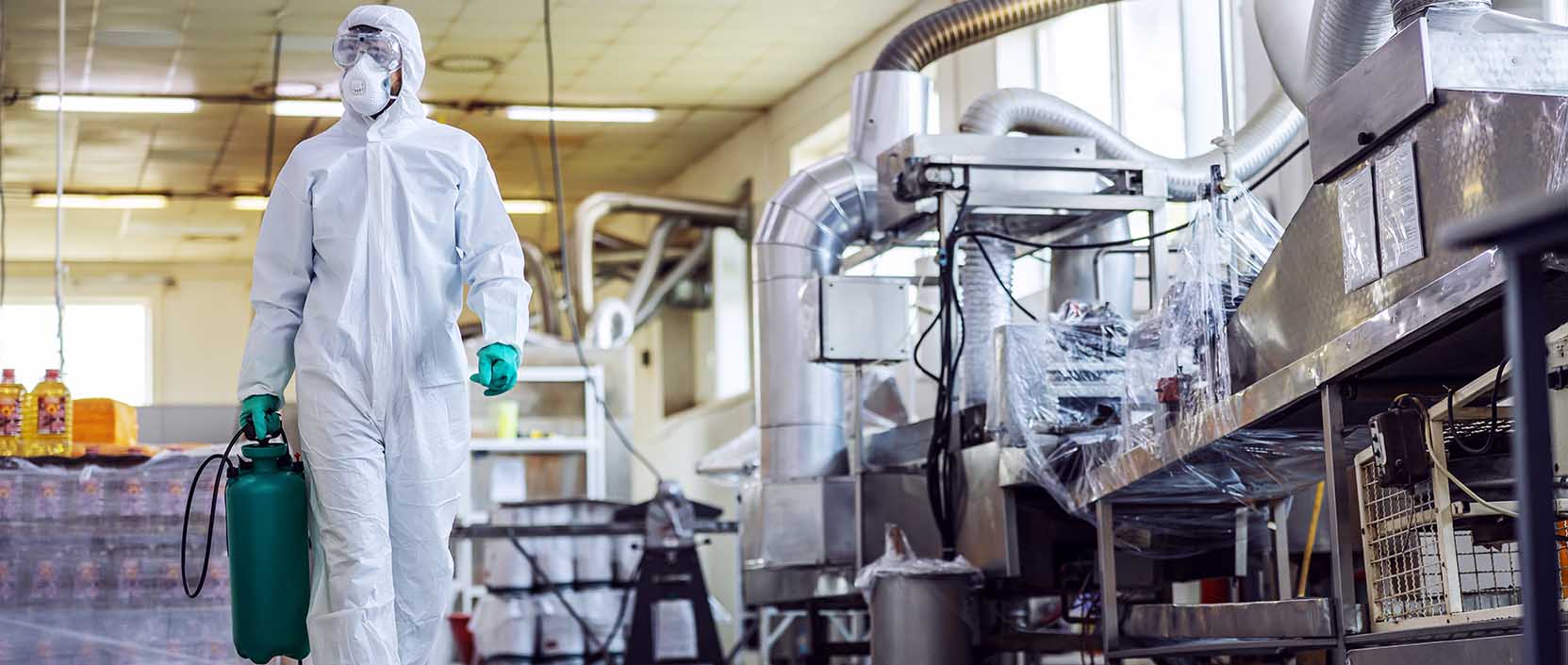
The process of eliminating microbiological life, particles, and residues in environments where contamination could compromise sensitive systems is known as critical environment sterilization. Sterilization strives for the highest level of control, in contrast to routine cleaning or even conventional disinfection. In the aerospace industry, this entails eliminating both visible and invisible contaminants, which are invisible without specialized equipment.
Because their systems and products must operate in harsh environments, aerospace facilities often require sterilization. A single impurity left on a propulsion component or satellite sensor can cause defects that are only discovered after launch, when it is too late to correct them. Therefore, sterile environments cannot be compromised.
Where People Shine, and Purpose Thrives
The Unique Needs of Aerospace Testing Labs
Aerospace testing labs handle highly specialized procedures, including materials testing, system integration, and component validation. These labs often replicate the harsh conditions encountered in space, including temperature fluctuations, radiation exposure, and vacuum environments. Any contamination introduced into these simulations has the potential to skew the results or compromise the accuracy of the tests.
Sterilization protocols in aerospace testing labs must therefore account for:
- Particle elimination to maintain clean air and surfaces
- Microbial control to prevent biological interference with sensitive materials
- Surface sterilization of equipment and instruments used during testing
- Monitoring systems that validate the ongoing effectiveness of sterilization protocols.
Servicon’s sterilization programs for aerospace labs are not just comprehensive, but also meticulous. They integrate HEPA and ULPA filtration, validated disinfectants, and rigorous monitoring to ensure testing environments remain sterile and accurate, leaving no room for doubt.
Manufacturing Environments and Sterile Requirements
Some of the world’s most cutting-edge technologies are assembled in aerospace manufacturing facilities. From the propulsion systems that propel spacecraft and airplanes into orbit to the avionics that steer them, every component needs perfect production conditions.
Three main goals are served by critical environment sterilization in these situations:
- Protecting product integrity. Sterile conditions ensure that sensitive parts are not exposed to contaminants that could reduce performance or reliability.
- Supporting compliance. Aerospace programs are held to international standards that demand controlled environments for assembly and testing.
- Reducing costs and risks. Contamination can result in costly delays, failed tests, or mission failure. Sterilization reduces these risks significantly.
Servicon ensures that manufacturing environments meet the highest standards of cleanliness and compliance by developing sterilization strategies that align with aerospace-specific guidelines and ISO 14644.
Specialized Sterilization Protocols
In the aerospace industry, sterilization calls for multiple strategies. Servicon employs a range of cutting-edge techniques, each selected for its ability to mitigate specific risks in aerospace environments.
1. HEPA and ULPA Filtration
In sterile settings, air purity is essential. By capturing particles as small as submicrons, HEPA and ULPA filters prevent airborne contaminants from reaching delicate equipment. By following cleaning procedures, Servicon supports and maintains these systems, extending their lifespan and efficiency.
2. Advanced Surface Sterilization
Sterilizing surfaces in manufacturing floors and aerospace labs requires the use of compatible agents that remove impurities without causing harm to delicate materials. Servicon uses aerospace-approved solvents and disinfectants. To ensure that surfaces remain clean without leaving residues, our teams employ sterile wiping, precise mopping, and controlled application techniques.
3. Vapor and Mist Sterilization
Vapor-phase sterilization or misting can be used to provide coverage in areas that are too big or complicated for traditional wiping. This method works especially well in large assembly bays or enclosed testing chambers.
4. Ultraviolet (UV-C) Sterilization
Another weapon in Servicon’s sterilizing toolbox is UV-C light. Without the use of chemicals, UV-C light inactivates bacteria, viruses, and fungi by disrupting their DNA when applied to specific areas.
5. Environmental Monitoring and Validation
Without evidence, sterilization is ineffective. Every program at Servicon incorporates environmental monitoring. This includes microbial testing, surface sampling, and particle counts to confirm the effectiveness of sterilization procedures. Data is recorded to help with regulatory compliance, quality control, and audits.

Sterile Environments for Satellites
Among the technologies that are most susceptible to contamination are satellites. In orbit, sensors, optics, and electronic systems must function with utmost precision. A single dust particle can shorten lifespan, skew an image, or interfere with communication.
Frequent air and surface sterilization, stringent gowning and entry procedures, and focused monitoring are all part of satellite assembly servicon sterilization programs. Our method ensures that assembly areas remain sterile from the design stage until they are ready for launch.
Sterile Requirements for Avionics
For both aircraft and spacecraft, avionics systems offer navigation, communication, and control. High-density electronic components used in these systems are susceptible to damage from particles, oils, and microbial residues. During integration, soldering, and assembly, sterile conditions are maintained to prevent contamination.
Servicon maintains avionics cleanrooms using precision sterilization techniques, ensuring that even the smallest impurities are removed before they can impair system functionality.
Propulsion Systems and Sterilization
Strict cleanliness requirements are necessary for propulsion systems. Particles, residues, or microbiological contamination can weaken structural elements, obstruct fuel lines, or disrupt combustion. Failures in propulsion can result in mission loss in space.
Propulsion assembly sterilization procedures focus on removing impurities that can compromise reliability. To maintain the purity of propulsion assembly environments, Servicon technicians utilize vapor sterilization, advanced vacuuming, and solvent-approved sterilization methods.
Training and Personnel Discipline
Sterilization requires qualified experts who are aware of the specific dangers associated with aerospace settings. Servicon makes significant training investments to guarantee that our staff members are knowledgeable about gowning procedures, contamination awareness, and sterilization techniques. Additionally, without jeopardizing security or compliance, our cleared personnel are permitted to work in restricted or classified aerospace facilities.
Just as crucial as sterilization technology is personnel discipline. To maintain a sterile environment, Servicon strictly enforces adherence to workflow protocols, tool sterilization procedures, and entry and exit protocols.
Sustainability in Sterilization
In aerospace operations, sustainability is becoming increasingly important. Servicon, in line with this trend, incorporates energy-efficient sterilization techniques, waste-reduction tactics, and, when applicable, green-certified agents into its sterilization programs. These procedures maintain the efficacy of sterilization while supporting aerospace partners in their sustainability initiatives, fostering a shared commitment to environmental responsibility.
The Servicon Advantage
General cleaning is not what Servicon does. With an emphasis on aerospace, we are experts in maintaining large facilities. What distinguishes us is our proficiency in sterilizing critical environments. Our highly skilled staff, stringent adherence to ISO 14644, and cutting-edge sterilization technologies work together to produce outcomes that safeguard delicate aerospace operations.
Aerospace companies benefit more than just a service provider when they choose Servicon. They acquire a partner committed to maintaining sterility in manufacturing settings and testing labs where operations free from contamination are essential to success.
Safeguarding Aerospace Innovation Through Critical Sterilization
Sterilization of critical environments is crucial for the aerospace sector. Sterile environments that eliminate particles, residues, and microbiological hazards are essential for satellites, avionics, and propulsion systems. Servicon provides the knowledge, procedures, and staff necessary to maintain these settings at optimal levels.
We guarantee that aerospace facilities remain sterile, compliant, and mission-ready by utilizing cutting-edge sterilization techniques, HEPA and ULPA filtration, and rigorous monitoring. Our emphasis on security and sustainability enhances our standing as a reliable partner for industry leaders in aerospace.
The future of aerospace innovation is safeguarded by Servicon’s sterilization techniques, in addition to its equipment.