
Maintaining building systems and equipment before issues arise is known as preventive maintenance. This work safeguards personnel, aircraft, and delicate parts in aerospace hangars and assembly bays. Dust accumulation, worn flooring, and dim lighting are examples of minor problems that can slow production or pose safety hazards. A well-organized preventive maintenance program lowers repair costs, minimizes downtime, and maintains operational efficiency.
Compared to most industrial settings, aerospace environments have higher standards. You deal with precise parts, avionics, fuel systems, and stringent regulations. These spaces are kept tidy, under control, and predictable through preventive maintenance. Schedules and long-term contracts are safeguarded when maintenance is planned rather than responding to malfunctions.
Why Is Preventive Maintenance Important in Assembly Bays and Hangars?
Every day, crucial work is supported by assembly bays and aircraft hangars. Workers move big machinery across large floor areas, install parts, and check systems. The effects spread quickly if floors crack or HVAC systems malfunction. These risks are decreased through preventive maintenance before they compromise productivity or safety.
Regulators and aerospace clients expect documented facility care. A robust maintenance program demonstrates your commitment to quality and safety. Additionally, it helps your team identify problems early on, when fixes are less expensive and time-consuming. This strategy gradually increases trust with aerospace partners.
How Does Aerospace Work Get Protected by HVAC Preventive Maintenance?
HVAC systems regulate air quality, humidity, and temperature. Inadequate air control in aerospace environments can damage components or disrupt assembly procedures. Preventive maintenance keeps systems operating within specified ranges, airflow balanced, and filters clean. This work protects both people and equipment.
Regular filter changes, coil cleaning, and duct inspections are all part of a good HVAC plan. It also involves monitoring humidity levels in clean zones and assembly bays. Dust, condensation, and static buildup are reduced when HVAC systems operate properly. These controls support year-round, consistent working conditions.
How Do Epoxy Floors Affect Preventive Maintenance?
In hangars and assembly bays, epoxy floors withstand foot traffic, rolling machinery, and large loads. These floors may chip, crack, or lose their protective layer over time. Floors that receive preventive maintenance remain safe, smooth, and sealed. By doing this, trip hazards are decreased, and aircraft parts are shielded from debris.
Regular cleaning, inspections, and spot repairs are all part of floor maintenance. Before they harm the surface, teams should remove grit, oils, and chemicals. Recoating on a schedule prolongs floor life and maintains marking visibility. Additionally, electrostatic safety programs in sensitive areas are supported by well-maintained epoxy floors.
Why Is Aerospace Facility Lighting Maintenance So Critical?
Safety, accuracy, and productivity are all impacted by lighting. For inspections and assembly work, technicians in aerospace environments depend on unobstructed vision. Errors and weariness are increased by dim lighting. Preventive maintenance guarantees that lights function as intended in large areas.
Regular fixture cleaning, bulb replacement, and inspections for dim or flickering areas are all part of a lighting plan. Despite their longer lifespan, LED systems still require inspection. Additionally, you should ensure that the task and emergency lighting satisfy the necessary requirements. Good lighting lowers the risk of accidents and promotes high-quality work.
How Does Preventive Maintenance Affect Electrostatic Safety?
Avionics and delicate electronics can be damaged by electrostatic discharge (ESD). Static risks in assembly bays and support areas can be reduced through preventive maintenance. This work protects components that cost thousands or even millions of dollars.
Humidity control, mat inspections, and floor grounding checks are all part of an electrostatic safety program. Additionally, maintenance teams inspect bonding points and signage. Static control systems continue to function as intended thanks to routine testing. By taking these precautions, the possibility of hidden damage developing later in service is decreased.
What Takes Place When People Ignore Preventive Maintenance?
Ignoring preventive maintenance increases risk and expenses. Work can be halted or parts damaged by HVAC malfunctions. Debris can be produced close to airplanes by cracked floors. Inadequate lighting can lead to mistakes when doing inspections. Sensitive electronics can suddenly be destroyed by static buildup.
Reactive repairs also disrupt schedules. Emergency repairs are more expensive and divert teams from their planned tasks. Downtime frequently delays production or flight schedules in aerospace settings. By maintaining predictable, stable systems, preventive maintenance helps avoid these issues.
How Do Cleaning and Maintenance Teams Work Together?
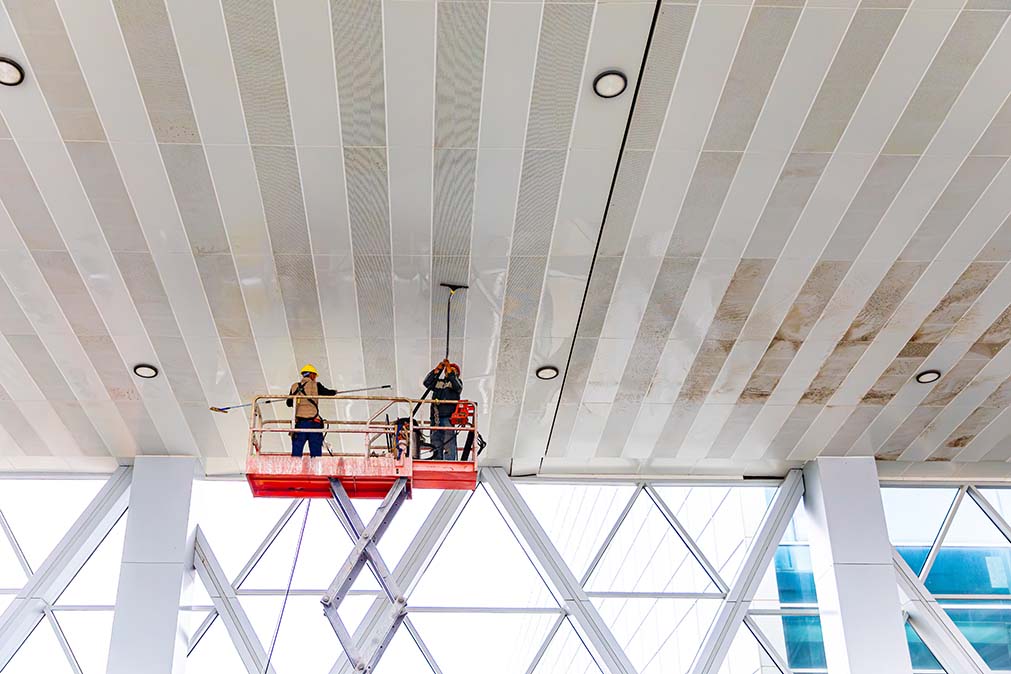
When cleaning and maintenance are coordinated, preventive maintenance is most effective. Dust, debris, and spills that harm floors and equipment are eliminated by daily cleaning. Systems are then routinely inspected and serviced by maintenance teams. These initiatives work together to safeguard the facility.
For instance, while HVAC cleaning preserves air quality, floor cleaning prolongs the life of the epoxy. Cleaning rounds frequently include lighting inspections. Both cleaning procedures and system inspections are necessary for electrostatic controls. Standards are maintained uniformly across sites and shifts through coordination.
What Should Be Included in a Plan for Preventive Maintenance?
A solid plan lays out duties, deadlines, and tasks. Electrostatic testing, lighting checks, floor care procedures, and HVAC inspections should all be documented. Clear documentation demonstrates compliance and helps monitor trends over time.
For daily, weekly, and monthly tasks, many aerospace facilities use checklists and logs. Teams can identify minor changes early with these tools. Managers can modify schedules or procedures when data indicates recurring problems. This attitude of constant improvement strengthens the facility’s performance.
How Does Aerospace Compliance Benefit from Preventive Maintenance?
Clean, controlled environments are what aerospace clients expect. Compliance with external audits and internal standards is supported by preventive maintenance. It demonstrates that you control risk rather than responding to setbacks. When customers assess suppliers and service partners, this is important.

Well-documented maintenance programs also support certifications and contract requirements. They demonstrate that systems remain within predetermined bounds. Facilities are able to pass inspections with fewer findings over time thanks to this consistency. Instead of being a last-minute endeavor, compliance is incorporated into regular operations.
Preventive Maintenance for Assembly Bays and Aerospace Hangars
For aerospace hangars and assembly bays, preventive maintenance safeguards uptime, quality, and safety. You can establish stable conditions for important work by concentrating on HVAC systems, epoxy floors, lighting, and electrostatic safety. With aerospace partners, this strategy lowers risk, saves money, and fosters trust.