
The cleanliness and quality standards in aerospace production environments are some of the highest in the world. Even small amounts of contamination can make propulsion parts, avionics, optical systems, and spacecraft hardware less effective, cause problems, or put mission success at risk, as they require high levels of accuracy. Compliance with cleanrooms is not just a requirement for the facility. It is a basic safety measure that protects equipment, people, and long-term reliability. Companies in the aerospace, defense, and life sciences fields use international standards such as ISO 14644 and ISO 9001, as well as their own quality systems, to monitor particle levels and environmental conditions.
Servicon helps these places by offering specialized cleaning and contamination control programs that keep big aerospace facilities in compliance with regulations. We work in cleanrooms, controlled environments, production floors, and classified R&D areas where following the rules is essential. The first step in making a successful contamination control plan is to understand how ISO classifications relate to air cleanliness classes. The work type determines the requirements for cleanrooms.
ISO Cleanroom Standards: What They Are and Why They Matter
ISO 14644 is the main cleanroom standard used in the aerospace industry. This standard covers everything from how much air needs to flow to how to measure particle counts and how to check them repeatedly. ISO 14644 assesses the cleanliness of air in a controlled space and uses a scale based on the number of particles allowed per cubic meter. ISO Class 1 is the cleanest environment, and ISO Class 9 is the least strict.
ISO classes specify the cleanliness required for activities such as satellite integration, optics assembly, composite layups, electronics manufacturing, and preparing propulsion systems. An ISO Class 7 cleanroom might be fine for some mechanical assembly jobs, but avionics or optical sensor production might need an ISO Class 5 or ISO Class 6 environment.
Servicon helps these programs by providing trained cleanroom experts who know how to clean with different materials and methods, tailored to the limits of particle control. Our teams know how to use HEPA filters, introduce tools in a controlled way, put on gowns, and choose the right chemicals to avoid shedding particles or damaging surfaces. Such expertise is very important in Aerospace Facility Maintenance, where dirt and dust can damage expensive equipment.

Cross-Referencing ISO Standards to Class Levels
It can be challenging to understand cleanroom classifications when different industries use different reference systems. ISO 14644 is used in aerospace and defense programs, and many old specifications in the US also use the Federal Standard 209E classifications. In sterile manufacturing or research settings, life sciences environments sometimes use both systems.
Here is a rough comparison:
- ISO Class 4 is about the same as Class 10
- ISO Class 5 is very similar to the older Class 100 environment
- Class 6 of ISO is the same as Class 1,000
- Class 10,000 is the same as ISO Class 7
- ISO Class 8 is equivalent to Class 100,000.
ISO Class 1 through Class 3 is about the same as the cleanest legacy Class 1 through Class 10 environments.
Even though Federal Standard 209E is no longer in use, many aerospace contracts still use it. This is why cleaning partners need to know both systems. Servicon teaches teams to read both ISO and legacy classes so everyone involved in cleaning follows the same procedures for documentation, inspections, and verification.
Standards for Crossover in Aerospace, Defense, and Life Sciences Facilities
Aerospace production has its own set of mission requirements, but many of the cleanroom standards are the same as those in defense, pharmaceuticals, medical devices, and biotech. These industries face similar contamination risks and require strict environmental controls. Some of the most important crossover standards are:
ISO 9001 Quality Management Systems
ISO 9001 helps aerospace, defense, and life sciences companies maintain their quality systems, documentation, and traceability. Cleaning processes directly help meet these expectations by making sure that procedures are always the same and that audits are ready.
Standards for Cleanrooms from ISO 14644
ISO 14644 sets limits on particles, tests airflow, monitors the environment, and checks cleanliness in all three sectors. The aerospace and defense industries use it for manufacturing and assembly processes. Life sciences utilize it for clean manufacturing processes and laboratory research.
GMP and GLP Protocols
Pharmaceuticals and biotech industries are often associated with Good Manufacturing Practices, while aerospace programs frequently employ similar regulations to produce high-purity products. Cleaning partners need to know how GMP-style documents fit with aerospace work instructions.
Rules for Environmental Health and Safety
There are strict safety rules for chemicals, biologics, and hazardous materials at both aerospace and life sciences facilities. Cleaning crews need to know how to work with these materials while keeping their work safe.
These crossover standards let businesses use successful contamination control methods from one field in another. Servicon often uses its cleanroom experience from life sciences and biotech projects in aerospace programs and vice versa.

How does following cleanroom rules contribute to the production of aerospace products?
In aerospace cleanrooms, following the rules is more than just meeting a contractual obligation. It ensures that the processes of making and putting things together work without introducing unnecessary risk. Dust, fibers, oils, chemicals, or microbes can get into sensitive hardware, causing damage or slowing production. A controlled environment makes sure that:
- Greater reliability of mechanical and electrical systems
- Reduced risk of defects or rework
- Protection of delicate materials such as composites and optics
- Improved consistency across multi-shift operations
- Stronger audit performance and supplier confidence
- Reduced risk of environmental excursions that halt production.
Servicon creates programs for controlling contamination that include daily cleaning, deep cleaning, and monitoring support. We ensure our processes align with the ISO Class the facility is pursuing. When an aerospace client has multiple cleanrooms with different Class levels, our teams adjust how they work, what they wear, and the chemicals they use for each room. This lets us easily assist with complex operations across the campus.
The Importance of Documentation in Compliance
Documentation is critical for cleanroom compliance because it helps with audits, quality reviews, and traceability. Clients in the aerospace and defense industries need to ensure that every cleaning job is done in accordance with the rules. Life sciences facilities have the same expectations.
Servicon maintains consistency by utilizing digital logging systems, standardized work instructions, and repeatable cleaning sequences. These systems help keep things on track, support environmental monitoring goals, and meet the client’s quality management needs. Proper paperwork is also essential for Aerospace Facility Maintenance, where both regulators and contractors expect full openness.
Control and Training for Employees
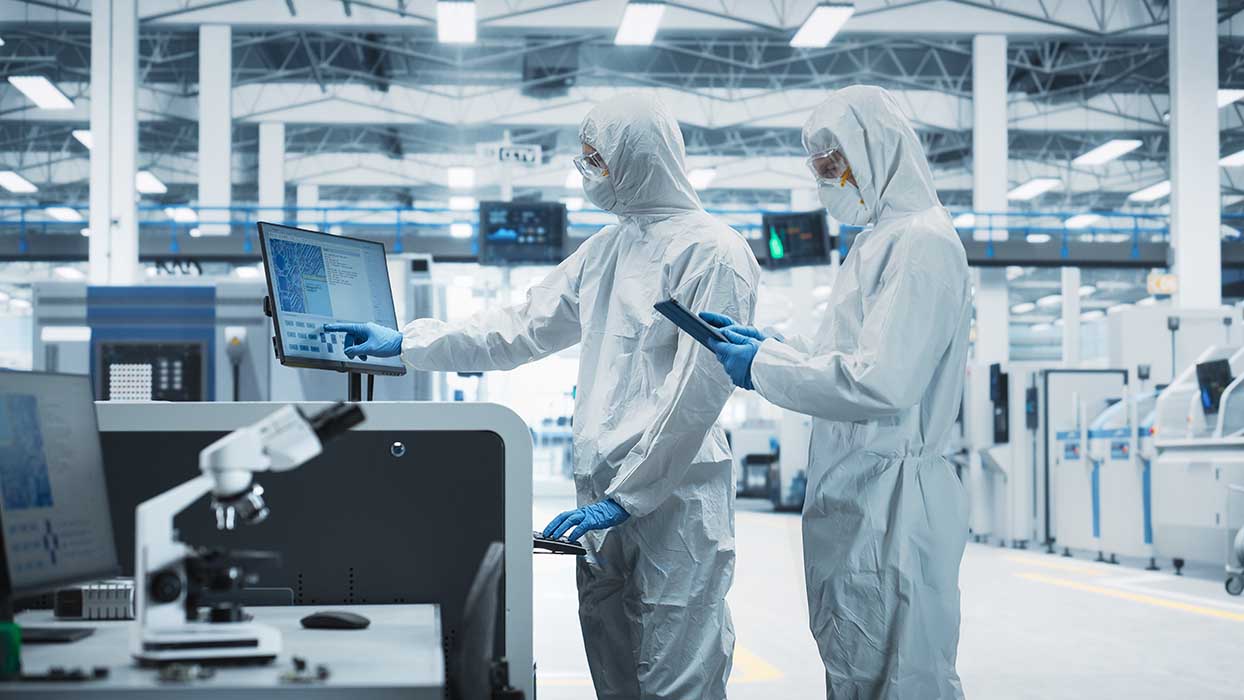
People are among the main factors that make cleanrooms dirty. Skin flakes, hair, lint, and the way things move all contribute to the creation of particles. ISO 14644 has strict rules for gowning, changing gloves, introducing new materials, and behavior that help reduce these risks.
Servicon teaches cleanroom teams how to:
- The correct order for putting on gowns
- Patterns of movement that make things less turbulent
- Organizing tools and keeping track of materials
- Cleaning with an HEPA vacuum and getting rid of particles
- Chemical compatibility and control of residues
- Cleaning workstations and putting surfaces in order.
These skills ensure that every specialist understands how their actions affect the cleanroom’s performance.
How Servicon Makes Sure That All Industries Follow the Rules
Servicon works in the fields of aerospace, defense, and life sciences. Our teams know how to use the right mix of ISO, Class, and internal quality standards to address common contamination risks across industries. Because we have experience across many fields, we can help businesses with a wide range of needs, from designing airplanes to integrating satellites to researching biologics.
To ensure we comply with the rules, we use the same quality control methods, extensive training programs, digital inspection tools, and regular audits. We clean both ISO Class 7 composite layup rooms and ISO Class 5 optics labs with the same level of care, attention to detail, and safety focus. This all-in-one approach helps clients keep their production going and keep their mission-critical hardware safe.